Transferring Ownership of Questioning: Intellectually Empowering Students by Giving them the Power to Create Questions

creation of a question (1)

Who should control what questions should be asked in the classroom?

During an inquiry exercise in my sixth-grade social studies class, one of my students exclaimed:  “How can we learn anything if all we do is ask questions?” This statement did not strike me at the moment but after reading chapter 2 of Warren Berger’s A More Beautiful Question my student’s statement returned to my mind in great clarity. As I reflect on my recent experiences in engaging my students in inquiry and questioning it is clear to me that they have little experience with formulating questions and they are certainly not accustomed to the teacher tasking them with creating their own questions.

One of the questions Berger (2014) attempts to answer is “Who is entitled to ask questions in class?” (p. 56) and it is clear to me that the locus of intellectual power in a classroom rests with the person or persons who decide which questions will guide student learning. Berger cites Dennie Palmer Wolf’s (1987) observation that teachers tend “to monopolize the right to question” and that teachers often use questions as a means to “check up on students” with the effect of stifling students’ willingness to take academic risks in the classroom (p. 56). Rather than being a source of intellectual stimulus, such questions can have the effect of inhibiting the intellectual growth of many students. Berger also shares John Seely Brown’s contention “that questioning by students can easily come to be seen as a threat by some teachers” (p. 56). Additionally, teachers face a constant drumbeat of standards and local expectations which “can be at odds with allowing kids to question” (p. 57).

Furthermore, Berger points to Joshua Aronson’s research in what he terms “the stereotype threat” that minority and low-income students contend with. Students who face these stereotypes are far less likely to take the social risk of asking a question in class out of fear it would compromise their own social standing with their peers (p.58). Aronson observes that “fear is the enemy of curiosity” and while Aronson is specifically referring to students in that statement fear seems to be behind most of the reasons ownership of questioning is not transferred to the students. Teachers fear that their standing before students would be eroded if unable to answer their students’ questions. I also believe that for many teachers the idea of empowering students to be the questioners could lead to their authority over the classroom being undermined.

Berger concisely lays out how who possesses the power to create questions in the classroom is fraught with a myriad of implications for students and teachers alike. That students need to learn and master the skills of questioning is an unquestionable must. The implications go well beyond possessing marketable skills for the 21st-century workplace because questioning lies at the heart of a vibrant and healthy democracy.

Since my job is to prepare my students to be competent and productive citizens in a democratic society, I must consider what they require to thrive in the world they are inheriting and it is abundantly clear that simply providing the right answer to questions is woefully insufficient. Are there ways a teacher can incorporate more fully the act of transferring ownership of questioning to students without compromising the requirement to target mandated state standards? Turning content standards into what Dan Rothstein and Luz Santana of the Right Question Institute refer to as a “Q-focus” (p. 60) statements can achieve both targeting the standard and giving ownership of questioning to students.

Increasingly teachers will need to regard themselves not only as math or English or social studies teachers but more importantly, as teachers of questioning.


References

Art of Questioning. (n.d.). Retrieved March 27, 2017, from http://people.usm.maine.edu/tcrabtree/MTL_ONLINE/Readings_627_files/05-artofquestioning.html

Berger, W. (2014). A more beautiful question: the power of inquiry to spark breakthrough ideas. New York, NY: Bloomsbury USA.

Graphic

Swan, D. W. (2017, March 26). Creation of a Question [Photograph]. Essexville.
 

Teaching Close & Critical Reading to Students with Deficits in Working Memory


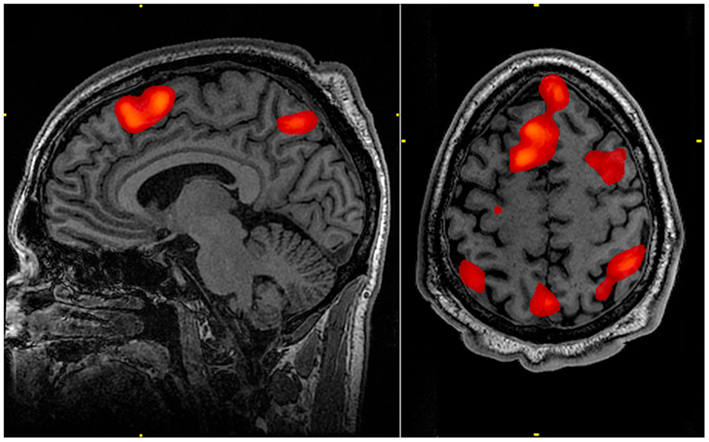
FMRI_scan_during_working_memory_tasks

FMRI scan during working memory tasks.

Teachers are presented with an array of problems daily in their practice. Rarely are these well-structured problems—that is—problems with a simple solution which results in complete resolution. Instead, teachers face ill-structured problems— problems with which an array of dynamic factors are at play. For many students who bring certain disabilities to the classroom, deficits in working memory can present challenges in a variety of instructional settings including instruction involving close and critical reading.


The Ill-structured Problem

Teaching close and critical reading to students who struggle with deficits in working memory can be a challenge to both students and teachers. Additionally, deficits in working memory can look different depending on the student and their disability. According to Alloway et al, there are two distinct forms of short term and working memory— verbal short-term and working memory and visuospatial short-term and working memory (2009). Alloway asserts that the working memory profile of a student with a disability is heavily influenced by the type of disability. For instance, Alloway contends that children with Specific Language Impairment (SLI) “had selective deficits in verbal short-term and working memory [and] that children with SLI struggle with storing and processing verbal information, rather storing verbal information only.” Conversely, children with Developmental Coordination Disorder (DCD) exhibit deficits in visuospatial memory.

What are the implications for teachers when considering the myriad of factors related to short term and working memory deficits in students when teaching close and critical reading? Can verbal and visuospatial deficits be addressed with a common instructional approach? Alloway suggests breaking down tasks into smaller and more manageable chunks to assist students with deficits for both working memory profiles. How can a teacher use technology assist such students with developing reading strategies that can empower them as close and critical readers?

Digitizing the Main Idea: Using Technology to Scaffold Close and Critical Reading

A tremendous amount of educational Add-ons are available for Google Docs. Having students use Google Docs in addition to the Highlight Tool Add-on provides students an opportunity to streamline the identification of the main ideas of a reading. A reading can easily be broken down into smaller components by simply copying and pasting paragraphs onto separate Google Docs pages or separate Google Docs. This can be done by the teacher but the student will benefit greatly if they learn to do this independently since it places the responsibility and power in their hands to master this particular approach. When this task is complete the reading has been broken down into smaller and more manageable chunks.

As the student carefully reads one of the paragraphs they can use the Highlight Tool to highlight the main ideas of the reading in different colors. Once they have finished this task they can copy the highlighted text and paste it. The Highlight Tool Add-on will then paste the highlighted main ideas into a table at the bottom of the page. The student can then summarize each main idea in their own words in the blank row beneath each highlighted main idea. From that point, the student can write a summary sentence of the paragraph.

The Highlight Tool Add-on can be structured to provide students multiple colors that they can use to make each main idea in the reading visually distinct. Once the main ideas have been copied and pasted the reading has essentially been simplified strictly to the main ideas. This removes extraneous information which the student will not have to distinguish from thus freeing their working memory for the essential task of summarizing the main ideas.

I believe this approach may provide students with reading strategies they can bring with them in their future academic lives. Additionally, this can be accomplished through easily accessible, portable, and affordable technology. The video below demonstrates how this approach can be implemented.

http://youtu.be/UKj3gTvIedg?hd=1
References

Alloway, T. P., Seed, T., & Tewolde, F. (2016). An investigation of cognitive overlap in working memory profiles in children with developmental disorders. International Journal Of Educational Research,751-6.

Graner, J. (n.d.). FMRI scan during working memory tasks [Photograph found in Neuroimaging Department, National Intrepid Center of Excellence, Walter Reed National Military Medical Center, Bethesda]. Retrieved March 18, 2017, from https://commons.wikimedia.org/wiki/File:FMRI_scan_during_working_memory_tasks.jpg (Originally photographed 2010)