Transferring Ownership of Questioning: Intellectually Empowering Students by Giving them the Power to Create Questions

creation of a question (1)

Who should control what questions should be asked in the classroom?

During an inquiry exercise in my sixth-grade social studies class, one of my students exclaimed:  “How can we learn anything if all we do is ask questions?” This statement did not strike me at the moment but after reading chapter 2 of Warren Berger’s A More Beautiful Question my student’s statement returned to my mind in great clarity. As I reflect on my recent experiences in engaging my students in inquiry and questioning it is clear to me that they have little experience with formulating questions and they are certainly not accustomed to the teacher tasking them with creating their own questions.

One of the questions Berger (2014) attempts to answer is “Who is entitled to ask questions in class?” (p. 56) and it is clear to me that the locus of intellectual power in a classroom rests with the person or persons who decide which questions will guide student learning. Berger cites Dennie Palmer Wolf’s (1987) observation that teachers tend “to monopolize the right to question” and that teachers often use questions as a means to “check up on students” with the effect of stifling students’ willingness to take academic risks in the classroom (p. 56). Rather than being a source of intellectual stimulus, such questions can have the effect of inhibiting the intellectual growth of many students. Berger also shares John Seely Brown’s contention “that questioning by students can easily come to be seen as a threat by some teachers” (p. 56). Additionally, teachers face a constant drumbeat of standards and local expectations which “can be at odds with allowing kids to question” (p. 57).

Furthermore, Berger points to Joshua Aronson’s research in what he terms “the stereotype threat” that minority and low-income students contend with. Students who face these stereotypes are far less likely to take the social risk of asking a question in class out of fear it would compromise their own social standing with their peers (p.58). Aronson observes that “fear is the enemy of curiosity” and while Aronson is specifically referring to students in that statement fear seems to be behind most of the reasons ownership of questioning is not transferred to the students. Teachers fear that their standing before students would be eroded if unable to answer their students’ questions. I also believe that for many teachers the idea of empowering students to be the questioners could lead to their authority over the classroom being undermined.

Berger concisely lays out how who possesses the power to create questions in the classroom is fraught with a myriad of implications for students and teachers alike. That students need to learn and master the skills of questioning is an unquestionable must. The implications go well beyond possessing marketable skills for the 21st-century workplace because questioning lies at the heart of a vibrant and healthy democracy.

Since my job is to prepare my students to be competent and productive citizens in a democratic society, I must consider what they require to thrive in the world they are inheriting and it is abundantly clear that simply providing the right answer to questions is woefully insufficient. Are there ways a teacher can incorporate more fully the act of transferring ownership of questioning to students without compromising the requirement to target mandated state standards? Turning content standards into what Dan Rothstein and Luz Santana of the Right Question Institute refer to as a “Q-focus” (p. 60) statements can achieve both targeting the standard and giving ownership of questioning to students.

Increasingly teachers will need to regard themselves not only as math or English or social studies teachers but more importantly, as teachers of questioning.


References

Art of Questioning. (n.d.). Retrieved March 27, 2017, from http://people.usm.maine.edu/tcrabtree/MTL_ONLINE/Readings_627_files/05-artofquestioning.html

Berger, W. (2014). A more beautiful question: the power of inquiry to spark breakthrough ideas. New York, NY: Bloomsbury USA.

Graphic

Swan, D. W. (2017, March 26). Creation of a Question [Photograph]. Essexville.
 

Teaching Close & Critical Reading to Students with Deficits in Working Memory


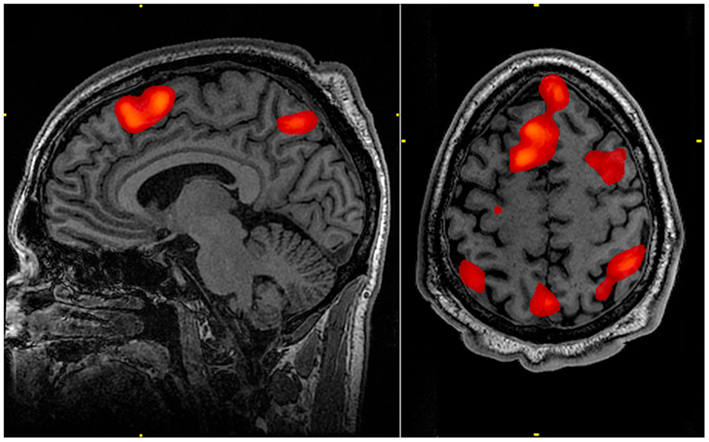
FMRI_scan_during_working_memory_tasks

FMRI scan during working memory tasks.

Teachers are presented with an array of problems daily in their practice. Rarely are these well-structured problems—that is—problems with a simple solution which results in complete resolution. Instead, teachers face ill-structured problems— problems with which an array of dynamic factors are at play. For many students who bring certain disabilities to the classroom, deficits in working memory can present challenges in a variety of instructional settings including instruction involving close and critical reading.


The Ill-structured Problem

Teaching close and critical reading to students who struggle with deficits in working memory can be a challenge to both students and teachers. Additionally, deficits in working memory can look different depending on the student and their disability. According to Alloway et al, there are two distinct forms of short term and working memory— verbal short-term and working memory and visuospatial short-term and working memory (2009). Alloway asserts that the working memory profile of a student with a disability is heavily influenced by the type of disability. For instance, Alloway contends that children with Specific Language Impairment (SLI) “had selective deficits in verbal short-term and working memory [and] that children with SLI struggle with storing and processing verbal information, rather storing verbal information only.” Conversely, children with Developmental Coordination Disorder (DCD) exhibit deficits in visuospatial memory.

What are the implications for teachers when considering the myriad of factors related to short term and working memory deficits in students when teaching close and critical reading? Can verbal and visuospatial deficits be addressed with a common instructional approach? Alloway suggests breaking down tasks into smaller and more manageable chunks to assist students with deficits for both working memory profiles. How can a teacher use technology assist such students with developing reading strategies that can empower them as close and critical readers?

Digitizing the Main Idea: Using Technology to Scaffold Close and Critical Reading

A tremendous amount of educational Add-ons are available for Google Docs. Having students use Google Docs in addition to the Highlight Tool Add-on provides students an opportunity to streamline the identification of the main ideas of a reading. A reading can easily be broken down into smaller components by simply copying and pasting paragraphs onto separate Google Docs pages or separate Google Docs. This can be done by the teacher but the student will benefit greatly if they learn to do this independently since it places the responsibility and power in their hands to master this particular approach. When this task is complete the reading has been broken down into smaller and more manageable chunks.

As the student carefully reads one of the paragraphs they can use the Highlight Tool to highlight the main ideas of the reading in different colors. Once they have finished this task they can copy the highlighted text and paste it. The Highlight Tool Add-on will then paste the highlighted main ideas into a table at the bottom of the page. The student can then summarize each main idea in their own words in the blank row beneath each highlighted main idea. From that point, the student can write a summary sentence of the paragraph.

The Highlight Tool Add-on can be structured to provide students multiple colors that they can use to make each main idea in the reading visually distinct. Once the main ideas have been copied and pasted the reading has essentially been simplified strictly to the main ideas. This removes extraneous information which the student will not have to distinguish from thus freeing their working memory for the essential task of summarizing the main ideas.

I believe this approach may provide students with reading strategies they can bring with them in their future academic lives. Additionally, this can be accomplished through easily accessible, portable, and affordable technology. The video below demonstrates how this approach can be implemented.

http://youtu.be/UKj3gTvIedg?hd=1
References

Alloway, T. P., Seed, T., & Tewolde, F. (2016). An investigation of cognitive overlap in working memory profiles in children with developmental disorders. International Journal Of Educational Research,751-6.

Graner, J. (n.d.). FMRI scan during working memory tasks [Photograph found in Neuroimaging Department, National Intrepid Center of Excellence, Walter Reed National Military Medical Center, Bethesda]. Retrieved March 18, 2017, from https://commons.wikimedia.org/wiki/File:FMRI_scan_during_working_memory_tasks.jpg (Originally photographed 2010)

Thinking About my Thinking: Life After CEP 811


Fotothek_df_tg_0006503_Theosophie_^_Philosophie_^_Judentum_^_Kabbala

Spirit and Consciousness of Man by Robert Fludd


With this blog posting, I finish my work in CEP 811: Adapting Innovative Technology in Education. This class has been one of the most challenging education courses I have taken. The prominent role that maker education has played in this class was a challenge for me. As a social studies educator, I struggled to find the relevancy of many of the activities in this course, especially the maker projects to my content area. Toward the end of the course, I began to see the light. Much of the research and new ideas around maker education were fundamentally about creative thinking and creative problem solving which, in my estimation, are universal across the spectrum of disciplines and content areas. Creativity is essential in all academic enterprises and is now the most highly prized commodity spoken of in terms of human capital and where education needs to take students.

I now have new schemas, which have changed how I view student empowerment, learning spaces, and assessment. Empowering students means giving them choice, at least to some degree, within what type of task they perform in their learning process. Technology is the gateway to making this a reality. Allowing students to play is powerful. It requires a teacher to surrender a level of control not seen in traditional education environments. But providing space, temporally and spatially, for students to have a sense of play in their own learning touches upon a powerful force, which awakens curiosity in a very fundamental and human way. Finally, when assessment is limited to the domain of the teacher a huge opportunity is missed. By including students in the assessment process in a meaningful way, students can develop an awareness of their own intellectual growth as learners.

My mind is humming with ideas. With this inertia, I see my practice as a teacher in new ways and I believe my teaching has been reinvigorated. Using assessment as a means to expand student metacognition, giving students space for play and creativity, empowering students with choice—these are just a few of the ways I see my teaching being impacted by what I have learned in CEP 811.

Assessing Creative Thinking: Assessment as Scaffolding for Metacognition

Le_Penseur

Photograph by Jean David & Anne Laure

Can creativity and creative thinking be assessed? Renowned educator Grant Wiggins observed that “educators sometimes say that they shy from assessing creative thought for fear of inhibiting students” (Wiggins, 2012). In CEP 811: Adapting Innovative Technology to Education, I have considered new thinking and research on assessing learning in the context of maker education.

As an educator charged with the assessment of student learning, I would assess creative problem solving during maker-inspired activities by developing a rubric/journal hybrid that makes creative and critical thinking the centerpiece of assessment. This rubric addresses formative assessment, summative assessment, and student self-assessment. The rubric portion of this assessment is to determine the student’s level of mastery of targeted concepts and student growth during the process. One of the aims of this assessment tool is to make a student’s thinking visible not only to the teacher but also, most importantly, to the students themselves.

The rubric features opportunities for student input. The teacher determines most of the criteria for the rubric, however, there are open slots for the class as a whole to determine criteria. This practice sets the foundation for students to play an intimate role in thinking about assessment as an inextricable part of their own learning.

Students assess their learning process daily with the rubric criteria and a brief written reflection on their own learning each day. A higher value is placed on the quality of self-reflection than any measure in the criteria of the rubric. While the rubric serves to measure student growth, its more important function is to provide a framework for students to develop skills in making their own thinking process visible to themselves. The journal portion of this assessment provides students opportunities to reflect on their learning by writing an explanation for how they assessed themselves on at least two different criteria in the rubric.

Theoretical Basis for this Approach to Assessment

This assessment device as a whole seeks to use the rubric a starting point for students to reflect on their own learning, practicing the act of making their own thinking and learning visible to their own eyes. According to Wiggins, one of the goals in a creative oriented assignment is to move a student to “self assess and self adjust on their own” and that is what my assessment attempt to do.

The other inspiration behind my focus is from research I read earlier in CEP 811. Sam Redding’s Personal Competencies has had great effect on my thinking of the emotional and cognitive facets of student learning. One of Redding’s personal competencies is metacognitive competency. In writing about metacognitive competency Redding states that:

Metacognition is commonly defined as “thinking about thinking,” but a competency that is engaged for purposeful learning requires more than introspective musing. In the context of schooling, metacognition is important to the teacher as well as the student because it is both taught and learned… Self-regulation of learning, then, is an aspect of metacognition that can be taught, learned, and practiced. In this sense, metacognition is a tool for problem solving, and new learning tasks present the student with a problem to be solved—how to achieve mastery (Redding, 2014).

This is what my assessment seeks to achieve—provide students with scaffolding to learn “self-regulation of learning.” When students acquire the skills that enable them to do so they have, by my estimation, achieved the pinnacle of intellectual empowerment. That is what I want most for my students.


References

Wiggins, Grant. (2012, February 3). On assessing for creativity: yes you can, and yes you should. Retrieved from https://grantwiggins.wordpress.com/2012/02/03/on-assessing-for-creativity-yes-you-can-and-yes-you-should/
Redding, S. (2014). Personal Competencies in Personalized Learning. Center on Innovations in Learning, Temple University. Retrieved from http://eric.ed.gov.proxy2.cl.msu.edu/?id=ED558063

Democratize Learning!

What does it mean to democratize learning? The idea of democratizing learning is, by default, student centered since students are the learners in education. To democratize learning, then, is to provide students a discourse COMMUNITY supportive of students constructing meaning as individuals and collectively as a community of learners. Maker education gives students AGENCY by giving them a voice in their own education and learning. Maker education embraces DIVERSITY of thought and background providing an environment where all perspectives have value. I like to call this trifecta CAD (Community, Agency, Diversity). Please check out my nifty infographic on how to democratize learning through Maker Education.

democratizeLearning


Dreaming of a Dynamic Classroom

I currently do not have a classroom so I decided to redesign one of the classrooms in which I did my student teaching. The particular classroom I am thinking of was composed of individual student desks arranged in the conventional manner—in rows facing forward toward the white marker board that doubled as the projection screen. My supervising teacher had two desks arranged in an L shape in the corner with an additional cabinet of drawers behind the desks. It was a fortress from which a teacher could survey their students as they quietly worked on their worksheets individually.

My redesign seeks to facilitate an environment that attempts to embrace social constructivism where “learners participate in a community of learners and construct meaning from the discourse practices in that community” (O’Donnell, 2012). The design of this classroom serves as a space where collaboration between students is not constricted but enabled by the flexibility of the furniture as well offering different spaces for different types of learning activities and experiences. The students’ desks and chairs are all on locking caster wheels with the desks seating two students per desk. I have all the desks facing in another to create units of four students but the desks and chairs can be easily repositioned to match any particular class-wide learning activity.

Swan_Classroom_view 1

All furniture rest on locking caster wheels allowing the classroom to be configured to the dynamic needs of a community of collaborative learners.

The teacher’s desk and chair can also be easily moved to accommodate various classroom arrangements. This mobility provides a dynamic in which the teacher can embed themselves with the students, easily moving from one group to the next or working one on one with individual students. Because the teacher’s desk and chair are mobile the teacher can easily open space in front of the white dry-erase marker board which will allow students and groups to use the whiteboard as a brainstorming medium and other student centered learning exercises.

Along the outside wall is a long counter space that can be used for various creative endeavors. For example, a group of students may elect to construct an interactive poster as an expression of their understanding, synthesis, and conclusions on a given historical research project. There is a round conference table for either impromptu student groups or teacher consultations. On the side opposite the outside wall is a library in the corner with comfortable chairs for reading. The library holds a combination of permanent books on historical thinking skills and practice and a rotation of books, which contain pertinent primary sources and essays, related to the current unit being taught.

Swan_Classroom_veiw 2

Since this school has a one-to-one ratio of laptops per student there is no need for a classroom computer. By utilizing the Google suite of productivity tools, students will be able to collaborate virtually as well and receive timely feedback from their teacher on individual assignments and collaborative projects.

My redesign does not come cheep. In this scenario all furniture is being replaced and additional furniture is being added such as the library shelving unit and chairs. The estimated cost of this redesign is $5,370. Such a redesign would have to ride the wave of a newly approved technology bond passed by the community and be implemented during the summer break.

Adapting Makey Makey in a Social Studies Classroom

DSC_0234

I was told by one of my professors in CEP 811, Adapting Innovative Technology in Education, that I would be challenged to think outside of the box. Her promise did not go unfulfilled. At first I was vexed as to how I would  use the Makey Makey in a History lesson. Thinking outside of the box comes easy for my wife who has been an art teacher for over a decade suggested an interactive map. I thought this was a brilliant idea but making it happen in a way that would genuinely engage students in the history and geography concepts I wanted to target seemed a bit of a stretch at first. After an online collaborative conversation with some of my peers and professors it all started to come together into this lesson which uses social constructivism as it’s foundation. This lesson aims to provide students with a learning experience in, which they construct meaning and knowledge individually and together with their peers. Any comments or feedback is not only welcomed but embraced.

Personalized Learning & the Maker Education Movement

Richard Culatta, Director of the Office of Educational Technology for the US Department of Education, believes there is a growing digital divide in education. The digital divide that concerns Culatta is between “those who know how to use technology to reimagine learning and those who simply use technology to digitize traditional learning practices” (Culatta 2013). In his TED talk, Reimagining Learning, Culatta puts forward personalized learning as a framework for harnessing the potential digital technology can bring to education.

In CEP 811 we have been exploring the growing maker movement and it’s potential to provide students with opportunities to take ownership of their own learning, develop critical thinking, and grow in their confidence as learners. What possibilities are there in personalized learning and maker education together? Are these two approaches compatible with one another or do the differences render both approaches impractical to combine?

To answer these questions consider The Role of Affective and Motivational Factors in Designing Personalized Learning Environments by ChanMin Kim and Personal Competencies in Personalized Learning by Sam Redding. Kim’s research presents guidelines for the design of “virtual change agents” which address affective and motivational factors in students in order to promote personalized learning and provide meaningful feedback in online remedial mathematics courses” (2012). In Personal Competencies in Personalized Learning, Redding proposes a Personal Competency Framework to support student growth in a personal learning environment. Redding lists personal competencies as cognitive competency, metacognitive competency, motivational competency, and social/emotional competency (2014). Both papers dovetail with Culatta’s vision of personalized learning because they compliment the real time feedback, adjusted pacing, and agency his personalized learning is built upon. How specifically does Kim and Redding’s work dovetail with Culatta’s description of personalized learning?

Kim and Redding address similar dimensions of personalized education by focusing on the personal and emotional aspects of student learning. Kim’s work specifically seeks to address negative emotional responses that are a result of students experiencing academic difficulty. Kim notes that research demonstrates that negative emotions related to academic performance can have a deep impact on future outcomes for students. Thus the central theme in Kim’s work is to provide guidelines for “individual and personalized support for positive emotional experiences in designing instruction” within the context of personalized learning (2012). Redding observes that, “psychological characteristics of individual students and their immediate psychological environments most directly influence educational outcomes” which parallels Kim’s addressing issues related to the impact that negative academic emotions can have on student growth (2014). So how does Culatta’s personalized learning dovetail neatly with Kim’s addressing affective and motivational factors and Redding’s personal competencies?

Culatta touts the potential of real time feedback. Real time feedback can empower students to more closely monitor their own learning. By monitoring their own learning, students have a greater chance of experiencing positive academic emotions and by monitoring their own learning every step of the way bolster bolster metacognition. Personalized learning adjusts to a student’s pace and level of progress and as a consequence can result in positive academic emotions and experiencing increased motivational, and social/emotional competency. Finally, Cullata describes personalized learning as providing students with agency because in personalized learning, students have choice in what tasks they will perform to gain mastery of content and skills. All of these factors lead to student empowerment, which in turn fosters motivation for further learning.

Is personalized learning and maker education compatible? It can be argued that maker education is a form of personalized learning. Maker education results in many of the same outcomes identified by Kim and Redding: positive academic emotions, metacognitive competency, and motivational/emotional competency. Additionally, maker education is embedded with the same dynamics as Culatta’s personalized learning: real time feedback, adjusted pace, and agency.


References

Kim, C. (2012). The Role of Affective and Motivational Factors in Designing Personalized Learning Environments. Educational Technology Research and Development, 60(4), 563–584.

Redding, S. (2014). Personal Competencies in Personalized Learning. Center on Innovations in Learning, Temple University. Retrieved from http://eric.ed.gov.proxy2.cl.msu.edu/?id=ED558063

“Reimagining Learning: Richard Culatta at TEDxBeaconStreet” Video at TEDxTalks. (n.d.). Retrieved July 24, 2016, from http://tedxtalks.ted.com/video.mason/Reimagining-Learning-Richard-Cu?

Playing Piano with Cardinal Directions

As a social studies educator, how to repurpose materials to interact with digital media was a very vexing—or I should I say—”wicked” problem. As I banged my head against the wall looking over a sundry of items my wife asked, “could you use a map for this project?” Leave it to an art teacher to think outside of the box so easily. So I went back down to our basement and pulled an old map of Montana to repurpose into some form of digitally interactive paper map. Next I needed to figure out how exactly to connect my map of Montana to my Makey Makey. I thought it was going to be a breeze but this project has taught me a bit of humility. In the end I believe my prototype demonstrates the direction I aim to take.

The following materials comprise the prototype described below:

  • Map of Montana (from my basement)
  • Makey Makey
  • Tin foil (kitchen drawer)
  • Scotch tape (Desk drawer)
  • Computer with internet connection
  • MaKey MaKey Piano Remix from Scratch website

DSC_0213

How to Build Playing Piano with Cardinal Directions

  1. With a pair of scissors, cut four finger size holes in your map. Position the holes so that they represent all four cardinal directions: North, South, East, West.
  2. Cut four squares of tinfoil a little larger than the holes cut into the map.
  3. Turn the map upside down and tape one piece of tinfoil over each hole leaving one end of the tinfoil square un-taped.
  4. Connect four alligator wires to the arrow keys on the Makey Makey. Keep in mind that the four arrow keys must correspond to the cardinal directions marked in the map. For example, the arrow pointing up is North, the arrow pointing down is South.
  5. Connect the other ends of the alligator wires to the open ends of the tinfoil squares being mindful to connect then to the corresponding positions on the map.
  6. Connect an alligator cord to one of the “Earth” connections in the Makey Makey.
  7. Pull up the Makey Makey Piano Remix on the Scratch website.
  8. When touched, each tinfoil button on the map should play the corresponding key on the Scratch piano program.

How can this Prototype be used in my Classroom Context?

This prototype is certainly underdeveloped so far as secondary social studies is concerned. There is still value in giving students some level of experience with printed maps to analyze the world and a fully developed interactive printed map, which interfaces with digital media might be the right mix of the NEW (Novel, Effective, Whole) approach to technology integration Mishra spoke of in his lecture.

A more sophisticated version of this prototype might ask students to identify geographic features that contributed or hindered the development of various societies throughout history as written about by Jared Diamond in Guns, Germs, & Steel. Another possibility is an interactive map, which would help students explore the geography of the Atlantic Slave Trade. Of course this hinges on a more advanced execution on the digital end as well which will require a considerable amount of play and exploration with designing Scratch scripts.

Multimodal Elements with Purpose

I have included one photograph of the map of Montana as a visual of the map before being repurposed as an interactive map. The static nature of the photo of the map before being repurposed contrasts with the demonstration video showing the map acquiring a new dynamic and interactive dimension.

References

Mishra, Punya. Teaching Creatively: Teachers as Designers of Technology, Content and Pedagogy. (n.d.). Retrieved July 14, 2016, from https://vimeo.com/39539571

To Make is Human, to Remix is Devine

Before enrolling in CEP 811, Adapting Innovative Technology to Education, I had not heard of the Maker movement and while I was familiar with the concept of remixing I had not considered that remixing is simply another form of creativity, invention, and innovation. In fact, without remixing ideas from one generation to the next, there is no human progress. This is the essence of what Sir Isaac Newton meant when he wrote that he was “standing on the shoulders of giants” except that he was not the first to allude to such an idea. As Kirby Ferguson adroitly points out in Everything is a Remix, it was 12th century French philosopher Bernard of Chartres who first formulated this idea. In borrowing this statement from Bernard, Newton was acknowledging his own dependence on the ideas of those who came before him to formulate his theory of gravity. It could be argued that Newton’s theory of gravity was, to some extent, a remix of ideas that were formulated before him.

Which brings us to the Maker movement—something that was not remotely on my radar. The Maker movement is a community of people who make things for the sake of making. By doing so they immerse themselves in problem solving, trouble shooting, and overcoming all variety of challenges to make whatever it is they are making. That making things is considered a new movement says a lot about our own collective self-concept as a nation and this is unfortunate. In his TED talk, We are Makers, Dale Dougherty observes that, “at one time it was common place to think of yourself as a maker.” The idea of human as maker has profound implications for education. As observed above, problem solving, troubleshooting, creative thinking, and overcoming challenges are implicit in the act of making. Outside of select activities, the high school robotics team for example, there is very little if any making going on in today’s classroom. The question for those of us who are educators is this: how can I infuse making into my own classroom, no matter the subject area. As a social Studies teacher this is a particularly unique challenge but one I intend to take up.

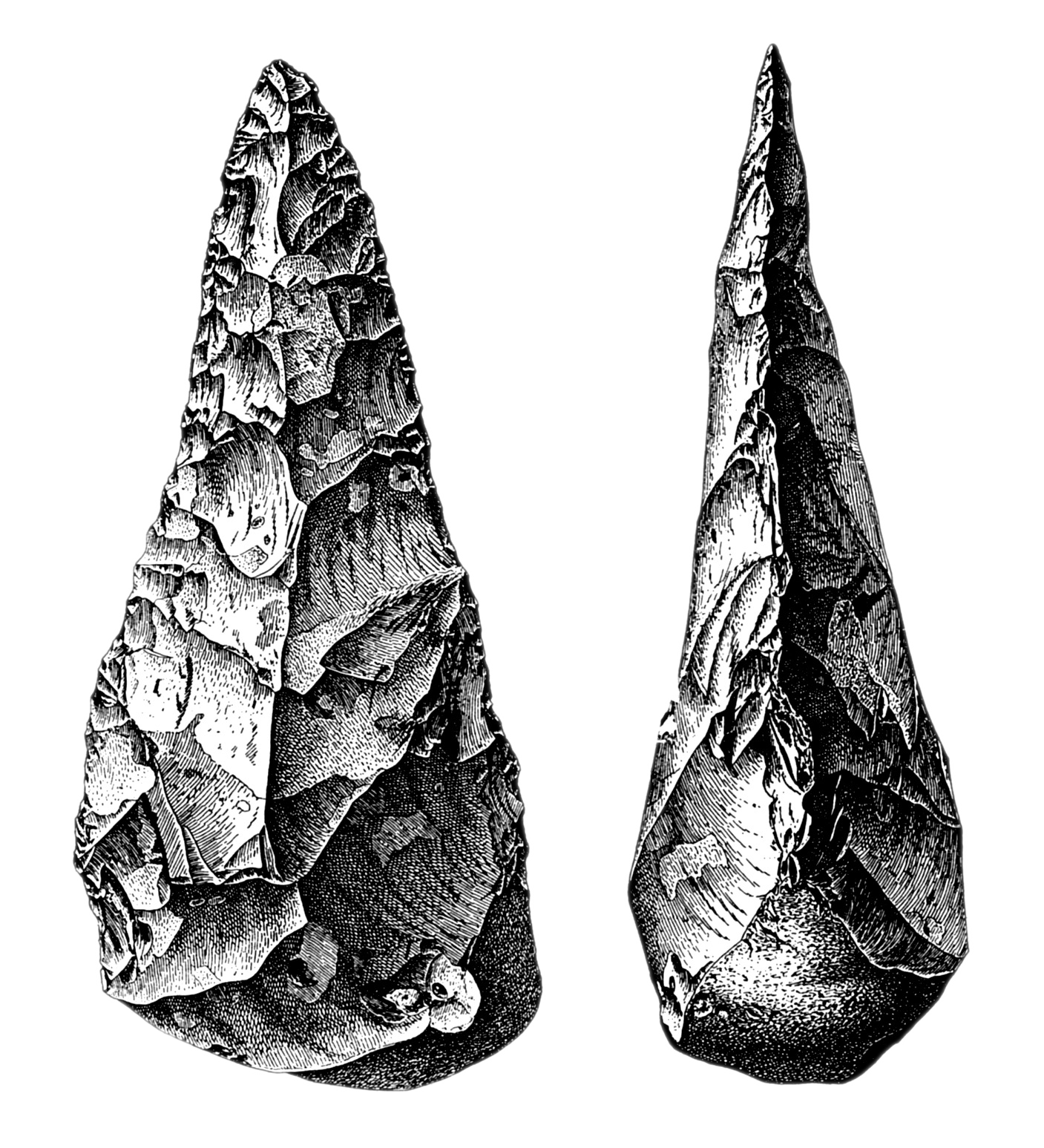
The whole idea of human as maker immediately intrigued me as a social studies educator. I immediately appreciated the extent to which this idea could be applied, beginning with the very first stone tools made by our very distant ancestors eons ago. The act of making then remixing started with the first tools made by humans and has been ongoing ever since. The thought of making and remixing as a chief characteristic of being human inspired my one minute video, To Make is Human, to Remix is Divine. I hope you enjoy the video and begin to see the maker and remixer inside of yourself.


References

Dougherty, D. (n.d.). We are makers. Retrieved from http://www.ted.com/talks/dale_dougherty_we_are_makers
Everything is a Remix Part 1 on Vimeo. (n.d.). Retrieved July 12, 2016, from https://vimeo.com/14912890
Ferguson, K. Everything is a Remix Part 1 on Vimeo. (n.d.). Retrieved July 12, 2016, from https://vimeo.com/14912890


Video References

187_1003703_africa_dxm.png (2048×2048). (n.d.). Retrieved July 11, 2016, from http://www.nasa.gov/sites/default/files/thumbnails/image/187_1003703_africa_dxm.png
Biface_silex.png (1407×1547). (n.d.). Retrieved July 10, 2016, from https://upload.wikimedia.org/wikipedia/commons/7/76/Biface_silex.png
company, american mutoscope and biograph, bitzer, g w, & congress), paper print collection (library of. (n.d.). Welding the big ring / [film, video]. Retrieved July 11, 2016, from https://www.loc.gov/item/96522219/
Duplessis, J. (1785). Portrait of Benjamin Franklin [Oil on canvas]. Retrieved from https://commons.wikimedia.org/wiki/File:BenFranklinDuplessis.jpg
Free Image on Pixabay – Bison, Cave Of Altamira. (n.d.). Retrieved July 10, 2016, from https://pixabay.com/en/bison-cave-of-altamira-1171794/
Lincoln Robotic Welder – YouTube. (n.d.). Retrieved July 11, 2016, from https://www.youtube.com/watch?v=J2XG7kfs09I
Prehistoric_Sites_and_Decorated_Caves_of_the_Vézère_Valley-108435.jpg (2048×1536). (n.d.). Retrieved July 10, 2016, from https://upload.wikimedia.org/wikipedia/commons/f/f8/Prehistoric_Sites_and_Decorated_Caves_of_the_V%C3%A9z%C3%A8re_Valley-108435.jpg
STS-124 Space Shuttle Launch. (2010). Retrieved from http://archive.org/details/NASAKennedy-MUn0mP7LwcI
Unknown. (1882). Lewis Howard Latimer. Retrieved from https://commons.wikimedia.org/wiki/File:Lewis_latimer.jpg
Unknown. (1898).
Portrait of Marie Skłodowska-Curie (November 7, 1867 – July 4, 1934),Retrieved from https://commons.wikimedia.org/wiki/File:Mariecurie.jpg
Wright Brothers First Flight. (n.d.). Retrieved from http://archive.org/details/WrightBrothersFirstFlight